
Disability Pride Month: Celebrating identity, history and community
 July 21, 2026 •

Every July, the disability community and its allies observe Disability Pride Month — a time to celebrate disability identity, honor history and raise awareness about ableism.
Origins
The observance is linked to the Americans with Disabilities Act (ADA), the landmark 1990 civil rights law that bans discrimination against people with disabilities. Disability Pride started as a day of celebration that year, and the first official Disability Pride Month event occurred in July 2015, marking the 25th anniversary of the ADA. Since then, July has been recognized as the month for the movement, with communities nationwide hosting parades, flag-raisings and educational activities.
The Disability Pride Flag
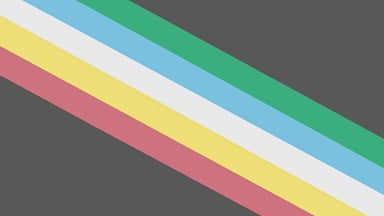
Designed by Ann Magill, the Disability Pride Flag features five stripes representing categories of disability against a charcoal background that represents mourning and anger over the oppression and discrimination disabled people have faced.
The flag was designed by disabled writer and activist Ann Magill in 2019, who aimed to make disability pride and disability movements more visible to the public.
The original design featured bold, zigzagging stripes on a black background. However, community members noted that the bold colors and zigzag pattern created a strobe-like effect on screens, which could trigger migraines, seizures and other sensory reactions. In response, Magill collaborated with the community in 2021 to redesign the flag, straightening the stripes, muting the colors and reordering them to better accommodate people with red-green colorblindness.
The current flag features a charcoal-gray background crossed diagonally by five stripes:
- Red: Physical disabilities, including mobility impairments, limb differences and chronic pain
- Gold/Yellow: Cognitive and intellectual disabilities and neurodivergence (such as autism, ADHD and OCD)
- White: Non-apparent and undiagnosed disabilities
- Blue: Psychiatric and mental health disabilities, such as anxiety, depression and PTSD
- Green: Sensory disabilities, including blindness, deafness and other sensory differences
The charcoal background represents mourning and anger over the oppression and discrimination disabled people have faced, including historical mistreatment and ongoing ableism. The diagonal band symbolizes disabled people breaking through barriers — the walls, exclusion and inaccessible spaces — that separate them from the rest of society, while also representing the disability community’s resilience and creativity as it pushes back against darkness and ableism.
Notably, Magill waived her copyright and placed the flag in the public domain, so anyone is free to use, share and adapt it.
Together, the month and the flag serve the same purpose: making disability visible, valued and celebrated — not as an afterthought, but as an essential part of the human experience.
About the EquitAbility ERG
The University of California EquitAbility Employee Resource Group promotes and enhances the well-being of people with disabilities, including staff, faculty and students, through active participation and representation in the affairs at UC and the community at large.
EquitAbility welcomes all members of the UC community who identify as disabled, abled, allies of the disabled community and/or who have an interest in supporting EquitAbility’s mission and objectives.
For information on EquitAbility, or to join us, please visit our website or email equitability@ucop.edu. Read about the formation of EquitAbility.
Tags: Disability Pride Month, EquitAbility


