
Fig. 1 video: Are people overreacting about “chemicals” being in everything?
UCSF Professor Tracey Woodruff explains how toxic chemicals are affecting our health — and what we can do to stop them.


California’s first solar-over-canal project goes online with the commissioning of the narrow and wide span arrays in the Turlock Irrigation District, bringing to life the ultimate “why didn’t I think of that!” idea.
Watch any documentary or listen to any podcast about cults, and you might find one common thread: So many cults are American.
Two scientists at UC San Diego’s Scripps Institution of Oceanography studied ocean waves — and ended up changing history.
After studying button-pushing pups for years, a San Diego cognitive science professor and his team will make you rethink how much dogs can tell us.
A few months ago, Fig. 1 posted a video showing what your brain looks like during a concussion, and people had a lot of questions. UC Berkeley neurologist Bob Knight investigated.
The University & College Designers Association awards recognized website, video and print projects.
What does microplastic pollution do to your body, and what can you do about it? UC experts are tackling our big plastic problem from every imaginable angle.
There’s no question that kind of heat is hazardous to your health. But why?
UC's Fig. 1 video series explores the incredible comeback of the world’s fastest animal.
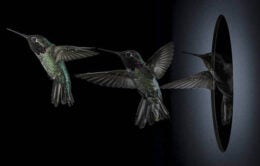
Hummingbirds zip around at dizzying speeds, employing moves that are downright acrobatic as they search for nectar. How do they do it?