
UC scientists find a clue in the hunt for dark matter
 September 13, 2026 •

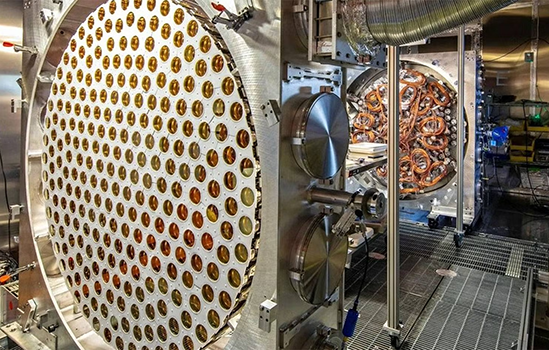
To search for dark matter, the LUX-ZEPLIN experiment uses photomultiplier tubes (shown here before installation in the detector) to capture light from particle interactions. (Credit: Matthew Kapust/Sanford Underground Research Laboratory)
Scientists with the LUX-ZEPLIN experiment, including researchers from four UC campuses and two affiliated national laboratories, have identified an unusual particle interaction that could offer a new clue in the search for dark matter. The experiment detected a single event that could not be explained by known background signals from ordinary matter, although researchers say more data is needed before it can be considered a discovery.
“This result is incredibly exciting and could represent the first hint of a dark-matter signal, though we can’t say that for certain yet,” said UCLA astrophysicist Alvine Kamaha. The team will continue collecting data to determine whether the signal grows stronger or fades away.
Read the full article to explore UC scientists’ search for dark matter
Tags: dark matter, research, UCLA


